

Web design trends for 2026 are shifting toward warmer, more human-centered digital experiences while still leveraging the power of AI in smarter, invisible ways. After years of bold futurism and hyper-polished aesthetics driven by artificial intelligence, users are craving authenticity, personality and accessibility.
In this article, we will look at the key design trends for 2026 that will shape how brands engage their audiences, from expressive typography and playful layouts to ethical design, mobile-first optimization and advanced AI-driven UX.
What were last year’s trends?
In 2025 AI took over the web design industry. Bold styles, clean layouts and AI-generated visuals became the standard. Countless companies included AI in their service offering, and those two letters started appearing everywhere. After two years of “AI-everywhere,” the direction is shifting (at least from an aesthetic point of view) . Designers are pushing toward more human-centric digital experiences. Some styles like flashy layouts, oversized typography and creative brutalism will remain popular in 2026. Others will fade, as brands try to distance themselves from the “Made with AI” feeling. Yet AI will continue to power the design process behind the scenes.
Before we start: what does it mean to follow a trend?
Using trends has one main purpose: offering users a compelling and engaging experience. But blindly following trends is a serious mistake that can easily damage a brand instead of helping it. Web design is less flexible than social media or advertising. Every update requires time, skills and therefore higher costs. Not every trend is worth the investment but when a trend aligns with who you are and what your users expect, it can give your business a real boost.
Before adopting a new design direction, ask:
- Does this trend match my brand identity?
- Is it relevant and familiar to my target audience?
- Is it new and rising, or already fading?
- How does it improve my user experience?
Web Design Trends for 2026, a prediction
1. Soft, playful, asymmetrical and organic
While 2025 was dominated by dark themes, muted palettes, and minimalism, we can see how 2026 will be characterized by a return to color and expressiveness. Compositions become soft, artistic, and more organic, seeking to move away from a system that is too rigid and too perfect. Expect playful asymmetry, gentle gradients, and warm tones that feel closer to the physical world. In this way, we seek a digital space that shares human and real emotions, trying to move as far away as possible from an AI-driven experience. Human design creativity is at the heart of this trend.
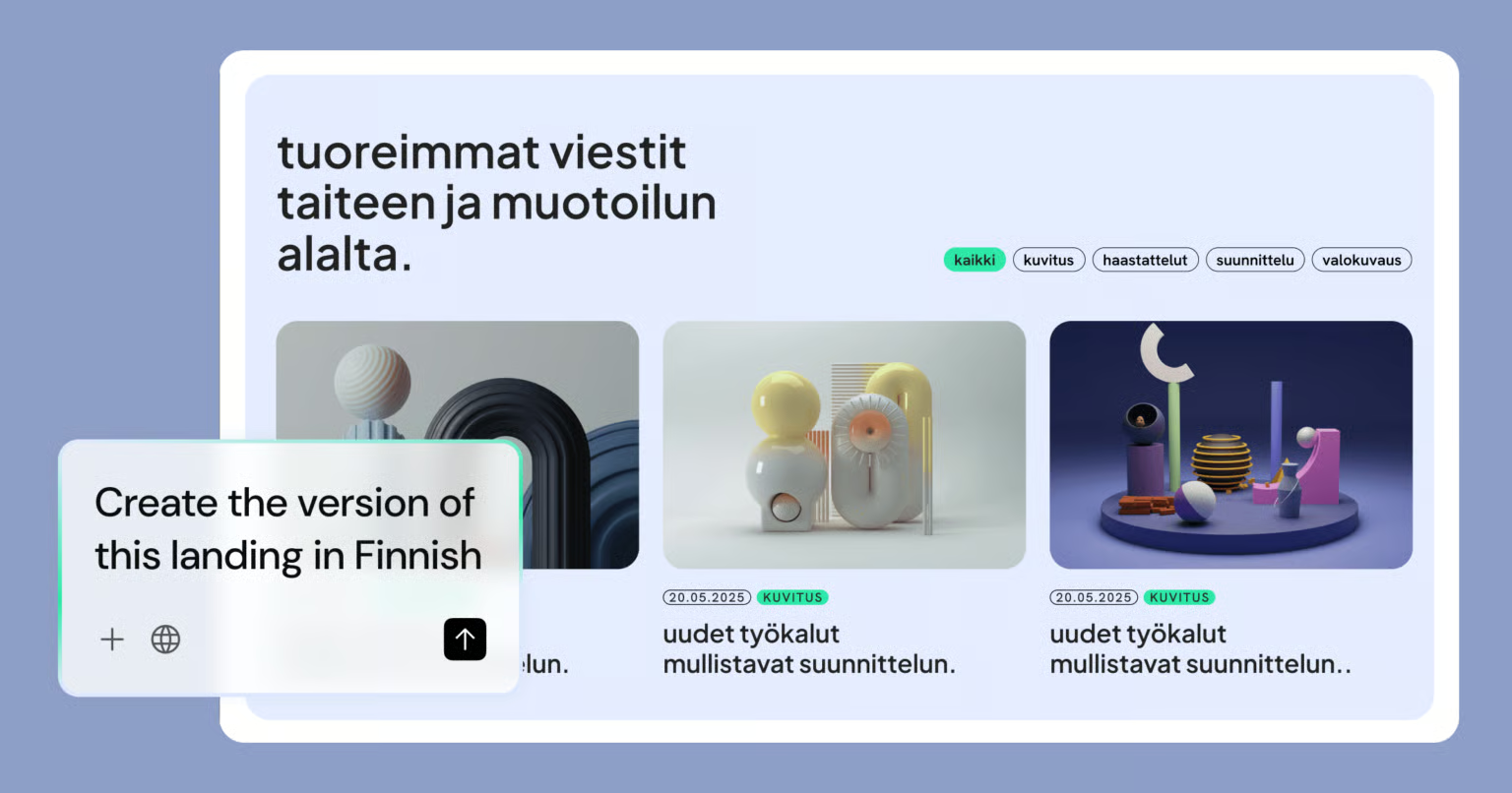
Image credit: Elementor
2. Mobile-first as a real priority
Mobile-first has been a buzzword for years, but it’s now a non-negotiable priority as smartphones dominate online browsing. With mobile devices generating over 60% of global web traffic, websites must be designed from the ground up with mobile in mind. Yet too often, mobile layouts are still treated as a reduced version of the desktop experience. Today, a website must behave like a true mobile application: fast, intuitive and perfectly aligned with the way users interact on smaller screens. To achieve this, designers must:
Reduce page transitions to avoid long loading times
Ensure clear, consistent navigation so users always know where they are
Replace hover-based interactions with mobile-friendly alternatives
- Create a perfect “Above-the-fold” design
We are in an era of extremely short attention spans, especially on mobile. This makes the above-the-fold area crucial: the hero section must immediately communicate:
Who are you?
What do you offer?
How can you help me?
Plus, a clear and visible CTA right away
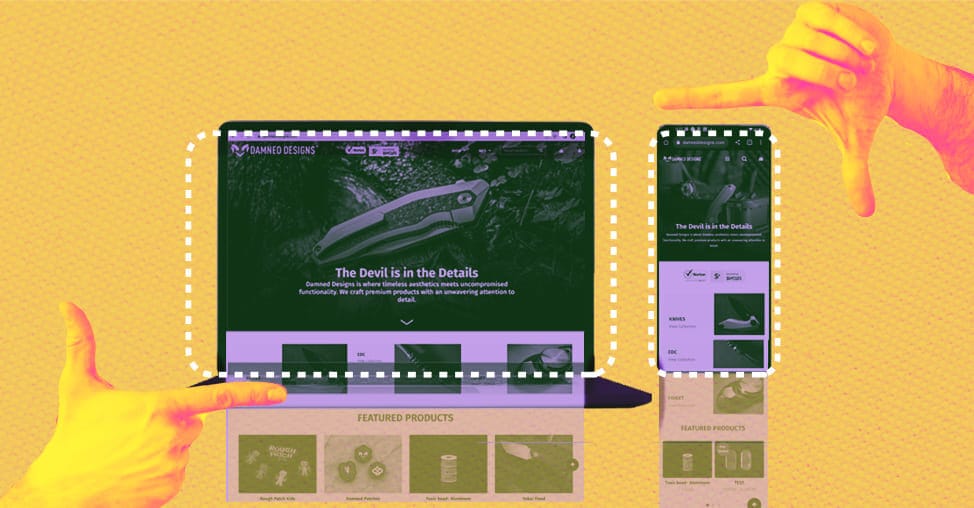
Image credit: ConvertCart
3. Dynamic cursors
A trend that began to be used extensively last year (and has actually been in vogue for many years) and continues to be relevant this year. This type of animation can improve the user experience in various ways:
- Guides and focuses attention
- Explain the brand story
- Minimizes confusion
- Make a website more memorable (fresh and engaging)
Some of the most popular variations include the dot cursor, which replaces the default arrow with a small interactive dot, and cursor followers, where a graphical element trails the user’s pointer to guide attention. Other effects go even further by generating visual reactions in the background as the cursor moves, creating a sense of depth and dynamism, as seen on websites like Five-Talks or Gentlerain.
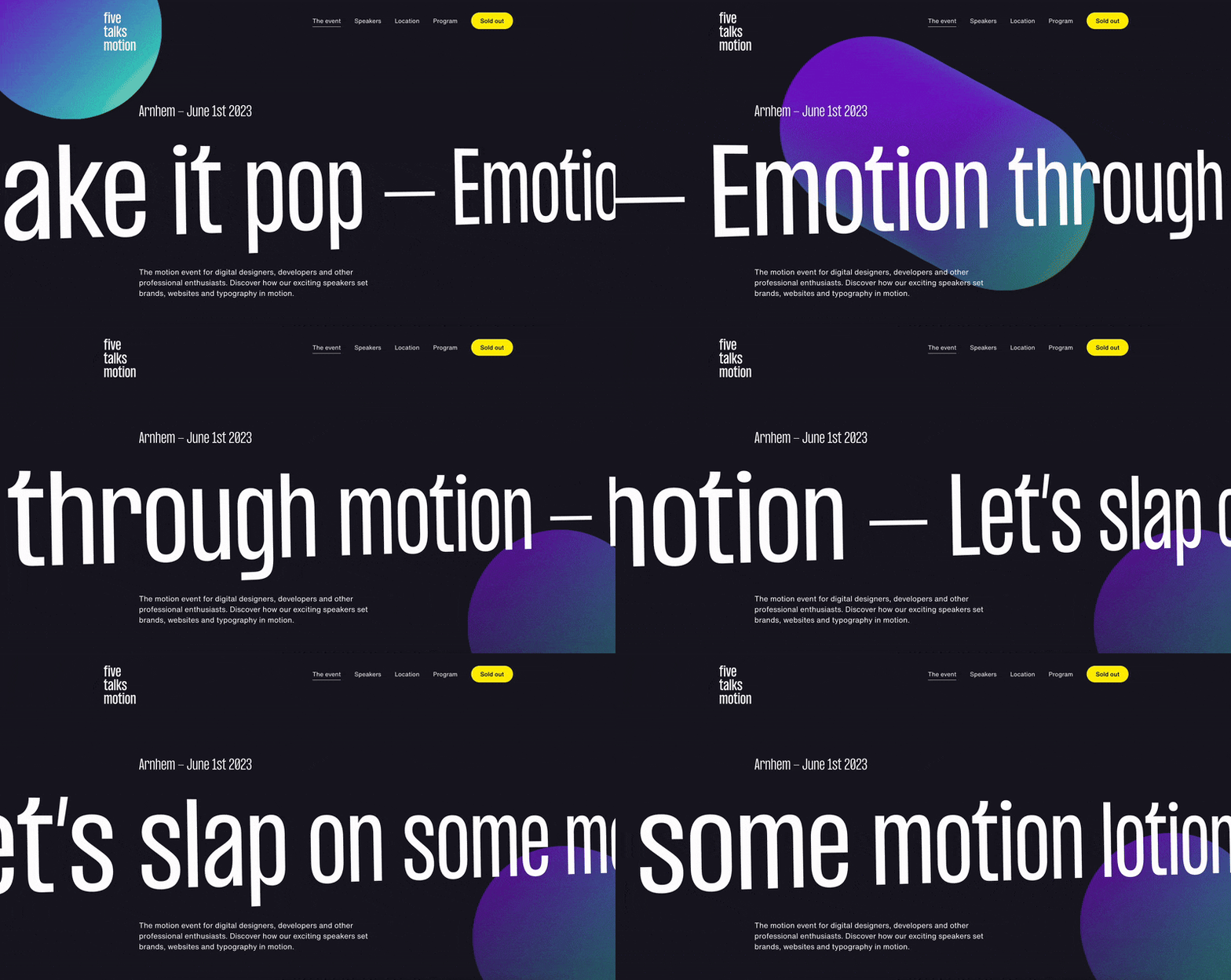
Image credit: Five Talks Motion
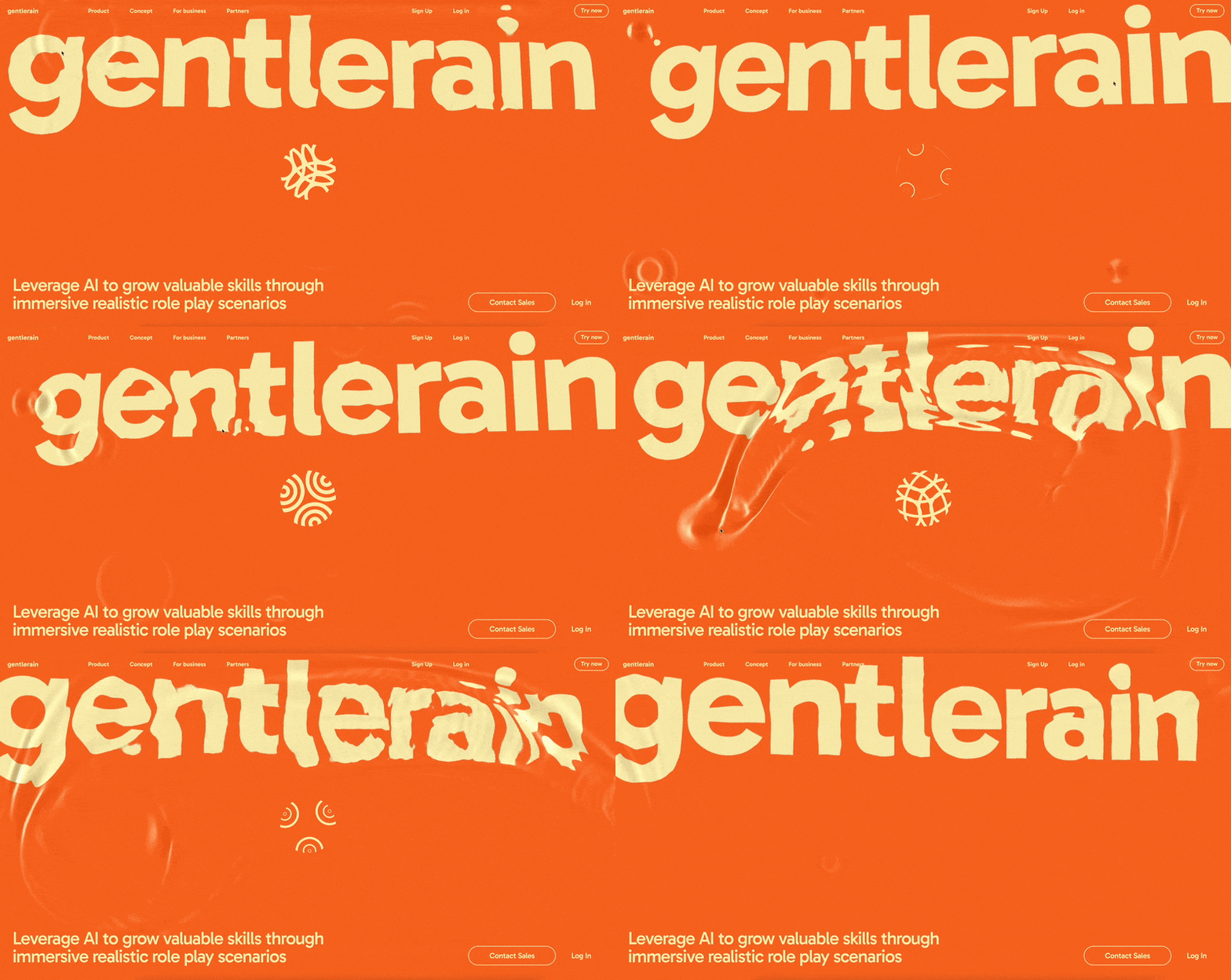
Image credit: Gentlerain
4. AI in service of UX
To counter the overwhelming presence of AI, design is shifting back toward a more human and emotional style. But design isn’t just visual; it’s about the entire user experience. Today, it’s possible to enhance UX using real-time data, dynamically updated content, smarter user assistance (like chatbots and voice UI), optimized UX copywriting, and hyper-personalization that adapts to each individual user.
A new term is emerging: AX – Artificial Experience. AX focuses on how AI interacts with digital products, services and ecosystems, delivering the right results to humans (or even directly to other systems) in the most seamless way possible.
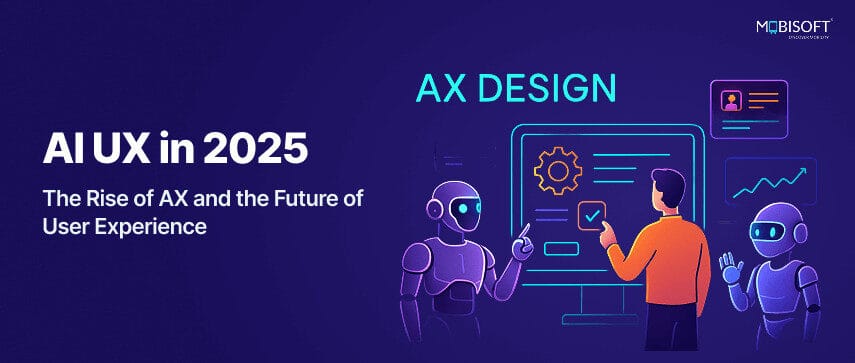
Image credit: Mobisoft Tech
5. Ethical, Sustainable and Accessible Design
Users are increasingly choosing brands that respect the planet and protect their privacy. Eco-friendly products and transparent practices build trust, and many people are willing to pay more to support companies that share their values. On the other side, brands that ignore ethical standards or misuse data are quickly abandoned. The message is clear: ethics is now a competitive advantage.
However, beware of greenwashing. Pretending to be sustainable when you’re not is one of the fastest ways to lose credibility. Every claim must be proven and aligned with real actions.
Being ethical also means being accessible. An accessible website isn’t just compliant with guidelines, it’s clear, inclusive and designed so that everyone can use it, regardless of ability or device. In 2026, this means:
- Strong contrast and legible typography
- Keyboard-friendly navigation
- Support for screen readers
- Clear information hierarchy
- Media alternatives like transcripts and captions
Accessible design improves UX for everyone and often boosts SEO performance too. Ethical, sustainable and accessible web design isn’t a trend for 2026, it’s the new standard.
6. Desktop-core, Retro and Creative Brutalism
When everything starts to look AI-polished and hyper-perfect, designers rebel. 2026 brings an aesthetic shift inspired by:
- Raw and imperfect brutalism
- Early desktop UI: windows, folders, pixel icons
- 90s and 2000s nostalgia
This style stands out because it looks bold, opinionated and unmistakably human.
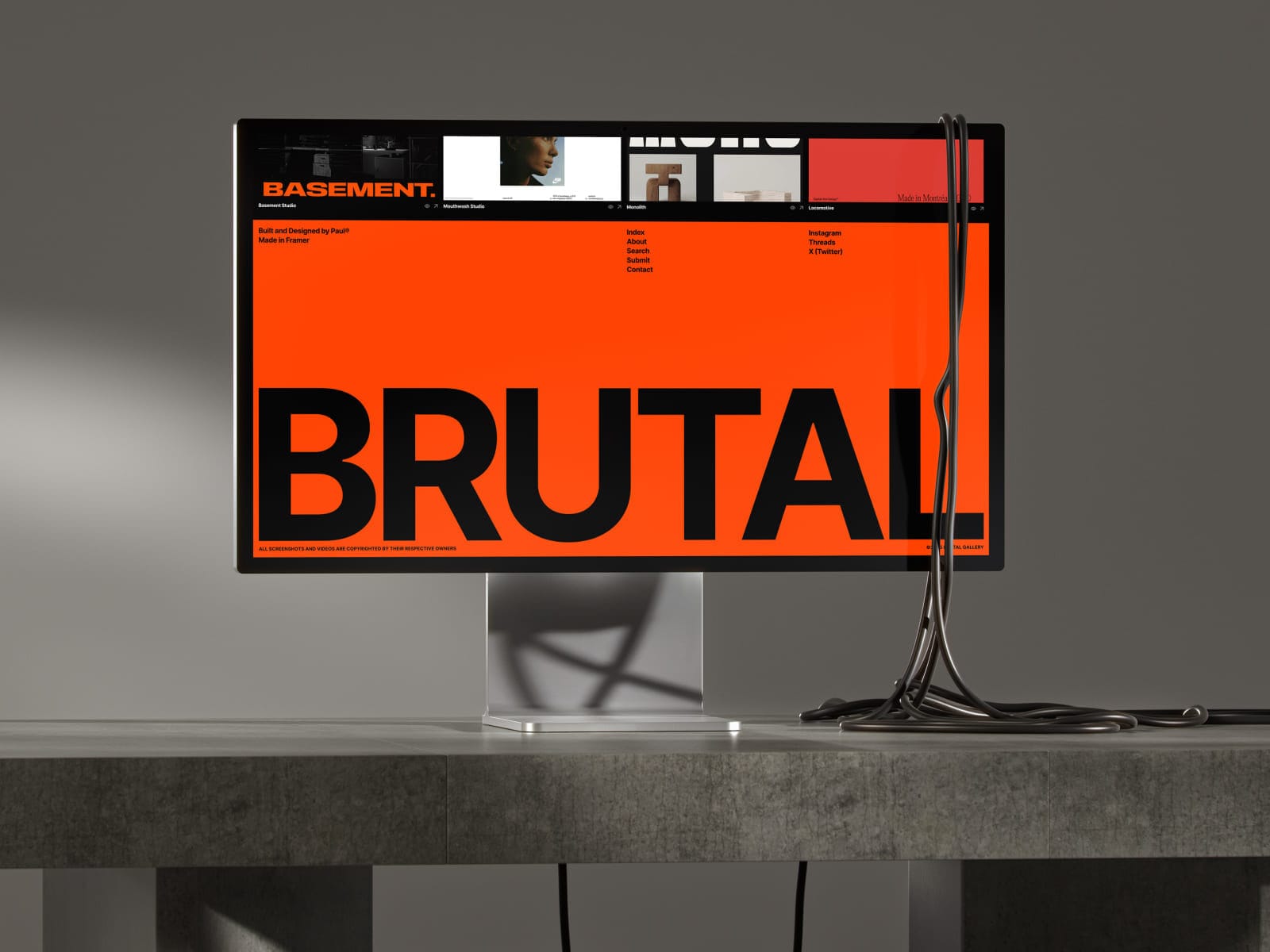
Image credit: Brutal – Framer
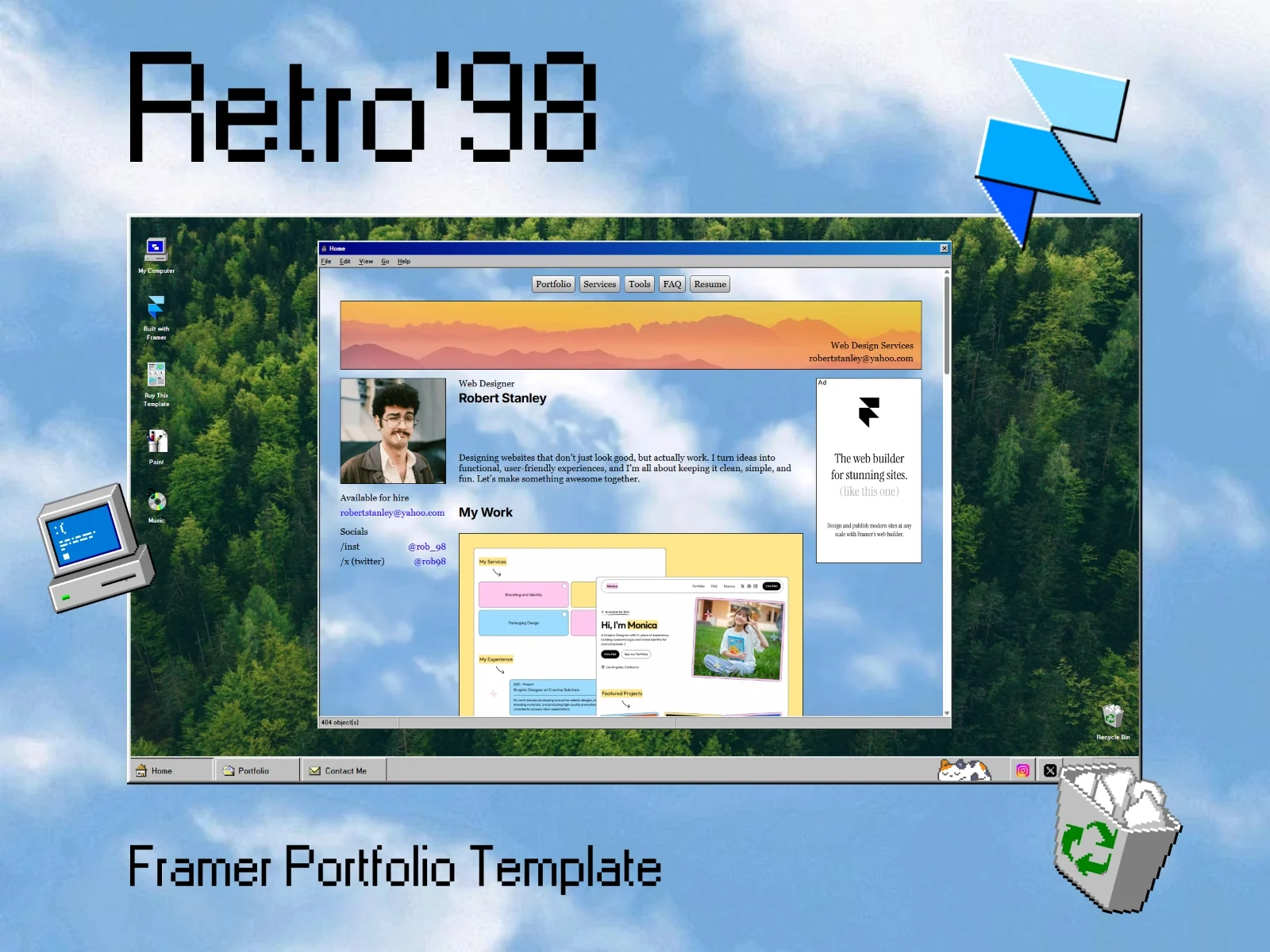
Image credit: Retro 98 – Framer
7. Liquid Glass
Introduced by Apple in mid-2025, liquid glass continues to rise. It makes a strong first impression and pairs well with minimal layouts. Liquid glass offers:
- Depth without clutter
- Futuristic elegance
- Smooth transparency and blur effects
- Light refractions that feel premium
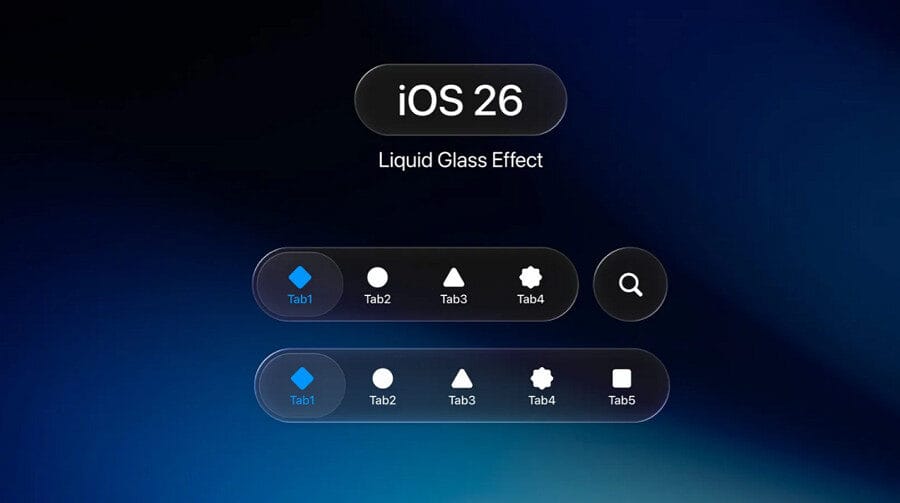
Image credit: Dribble
8. Expressive Typography
Typography makes content becomes alive, and reading becomes an experience on its own. Typography becomes an active design element:
- Words stretch, shift and react to scrolling
- Animated headlines enhance storytelling
- Interaction builds emotional engagement
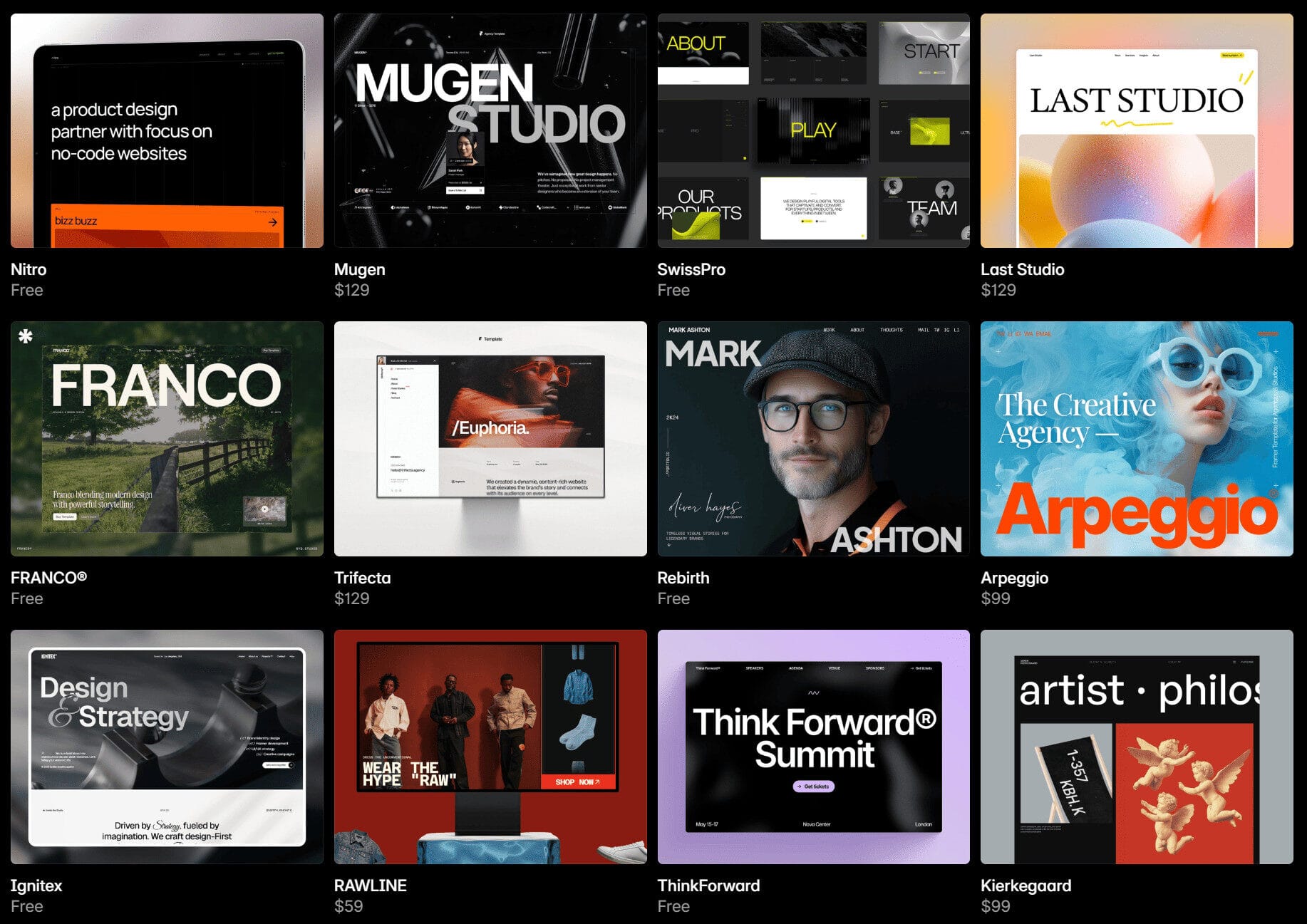
Image credit: Framer Marketplace
9. Soft Sound Design
Sound is gaining importance in web interfaces. UI sounds must stay subtle, lightweight and optional. The goal isn’t noise, but presence. When used with intention, sound design:
- Enhances feedback and clarity
- Helps users navigate without visual overload
- Makes experiences more immersive and emotional
Conclusion
2026 is a year of balance. Technology keeps evolving, but users demand genuine and human-focused experiences. The future of web design blends:
- Emotional visual styles
- Performance and accessibility
- Smart yet discreet use of AI
Follow trends that support your story and serve your users. Because at the end of the day, design isn’t about looking modern. It’s about making people feel understood.